EN
DE
NL
Europe’s most valuable tech powerhouse is ASML.
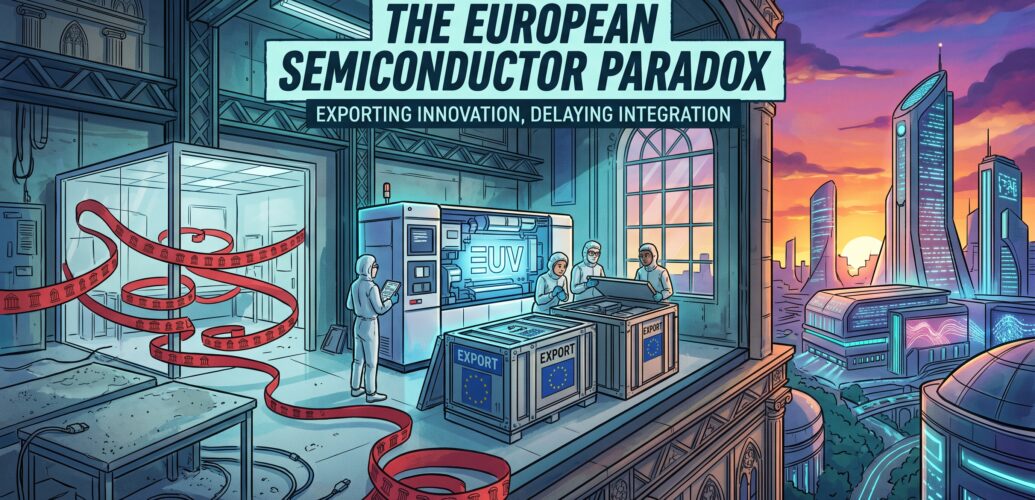
Without ASML’s extreme ultraviolet (EUV) lithography systems, not a single modern high-end AI processor or smartphone chip on the planet could be manufactured.
Yet, ASML Executive Vice President Frank Heemskerk recently laid out an uncomfortable truth: ASML generated zero system sales in Europe in Q2. Zero.
While politicians across Berlin and Brussels talk about “technological sovereignty,” ambitious AI hubs, and multi-billion-euro cloud data centres, reality tells a very different story:
-
The machines go elsewhere: ASML’s cutting-edge machines are heading almost entirely to South Korea, Taiwan, China, and the US.
-
No ground is being broken: You cannot sell lithography systems in a region where virtually no advanced semiconductor fabs are being built.
-
Aggressive global competition: While the EU gets tangled in regulatory red tape and sluggish subsidies, countries like the US, China, and India are rolling out the red carpet with massive incentives, aggressively lobbying ASML to expand R&D and manufacturing on their soil.
The irony couldn’t be sharper.
European leaders want Europe to be an autonomous AI pioneer. But how can you achieve digital sovereignty if you don’t even manufacture the silicon that powers the algorithms?
Subsidizing a handful of data centres while relying 100% on imported advanced chips is not autonomy — it is outsourced dependence wrapped in ambitious rhetoric.
If Europe doesn’t fix its investment climate, energy costs, and bureaucratic bottlenecks, the continent will remain what it is right now:
The workshop that invents the world’s most advanced machinery — only to watch the rest of the world build the future with it.
What needs to change first?
Can the EU Chips Act still be saved, or should Europe stop pretending it can compete in bleeding-edge silicon and focus on software and design instead?
Sources:

