Germany’s tendency to look the other way: geopolitical ignorance, provincialism and the failure to recognise a turning point
EN
DE
NL
Whilst European intelligence services are warning of hybrid attacks and an existential test for NATO within a matter of months, the political debate in Germany is mired in parochial navel-gazing. Election night reveals a disturbing phenomenon: a country that has entrenched itself behind bureaucracy and sham debates, whilst suppressing the interconnection between geopolitics, the economy and technological sovereignty.
1. The dictates of parochialism: whilst the neighbour’s house is on fire, we argue about the hedge
Anyone who followed election night in Germany yesterday witnessed an oppressive detachment from global reality. Whilst in Prague, Warsaw and the Baltic states, intelligence chiefs such as Michal Koudelka are warning that Russia intends to test NATO’s alliance loyalty within months rather than years through targeted sabotage, drone incursions and border provocations, debates in Germany are dominated by local government responsibilities, bans and micropolitics.
This focus on the purely local is no longer a harmless side-effect of federalism, but a systemic failure. It is the collective clinging to a convenient maxim: ‘What I do not know does not exist for me.’ Over the decades, the Federal Republic has lost the ability to understand foreign, security and economic policy as an interconnected ecosystem.
Anyone who followed election night in Germany yesterday witnessed an oppressive detachment from global reality. Whilst in Prague, Warsaw and the Baltic states, intelligence chiefs such as Michal Koudelka are warning that Russia intends to test NATO’s alliance loyalty within months rather than years through targeted sabotage, drone incursions and border provocations, debates in Germany are dominated by local government responsibilities, bans and micropolitics.
This focus on the purely local is no longer a harmless side-effect of federalism, but a systemic failure. It is the collective clinging to a convenient maxim: ‘What I do not know does not exist for me.’ Over the decades, the Federal Republic has lost the ability to understand foreign, security and economic policy as an interconnected ecosystem.
2. The fatal separation of geopolitics and business
A particularly worrying illusion, which pervades talk shows and business platforms, is the belief that entrepreneurship and the economy can be decoupled from the upheavals of global politics. Anyone who talks today of resilience, transformation and agility without taking into account supply chain risks, cyber-attacks, military deterrence and raw material monopolies is not practising management, but reading tea leaves.
Germany is suffering from a dangerous culture of depoliticisation. There is a desire to manage the prosperity of the past using the tools of ‘cosiness’. Yet without the capacity for geopolitical action, there can be neither stable energy prices nor secure markets, nor intact supply chains. Blindness to this truth jeopardises the economic foundations of the entire continent.
3. The view from the Netherlands: pragmatism trumps scepticism
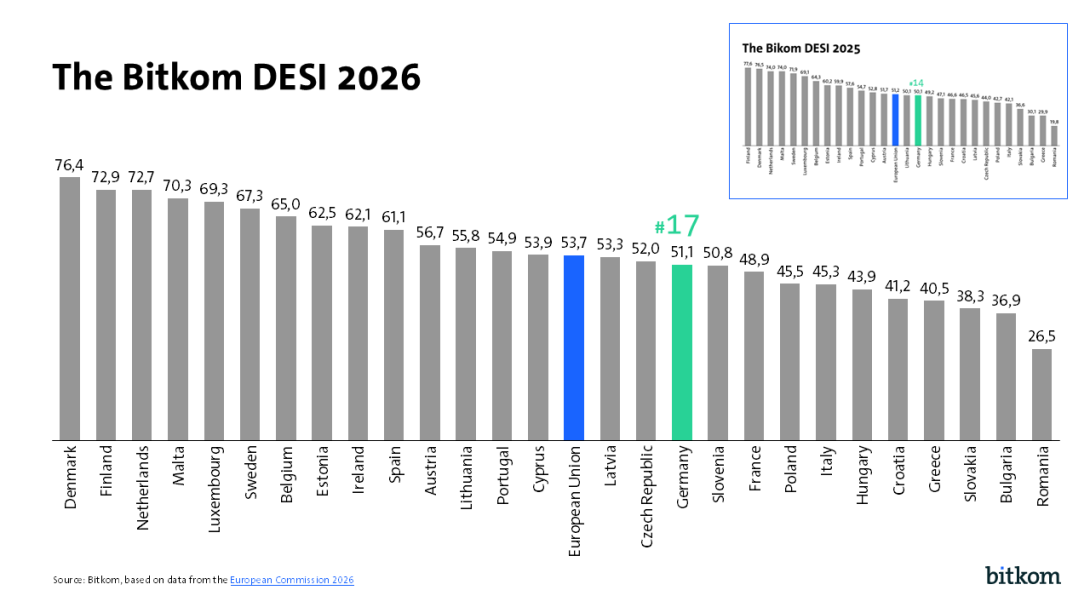
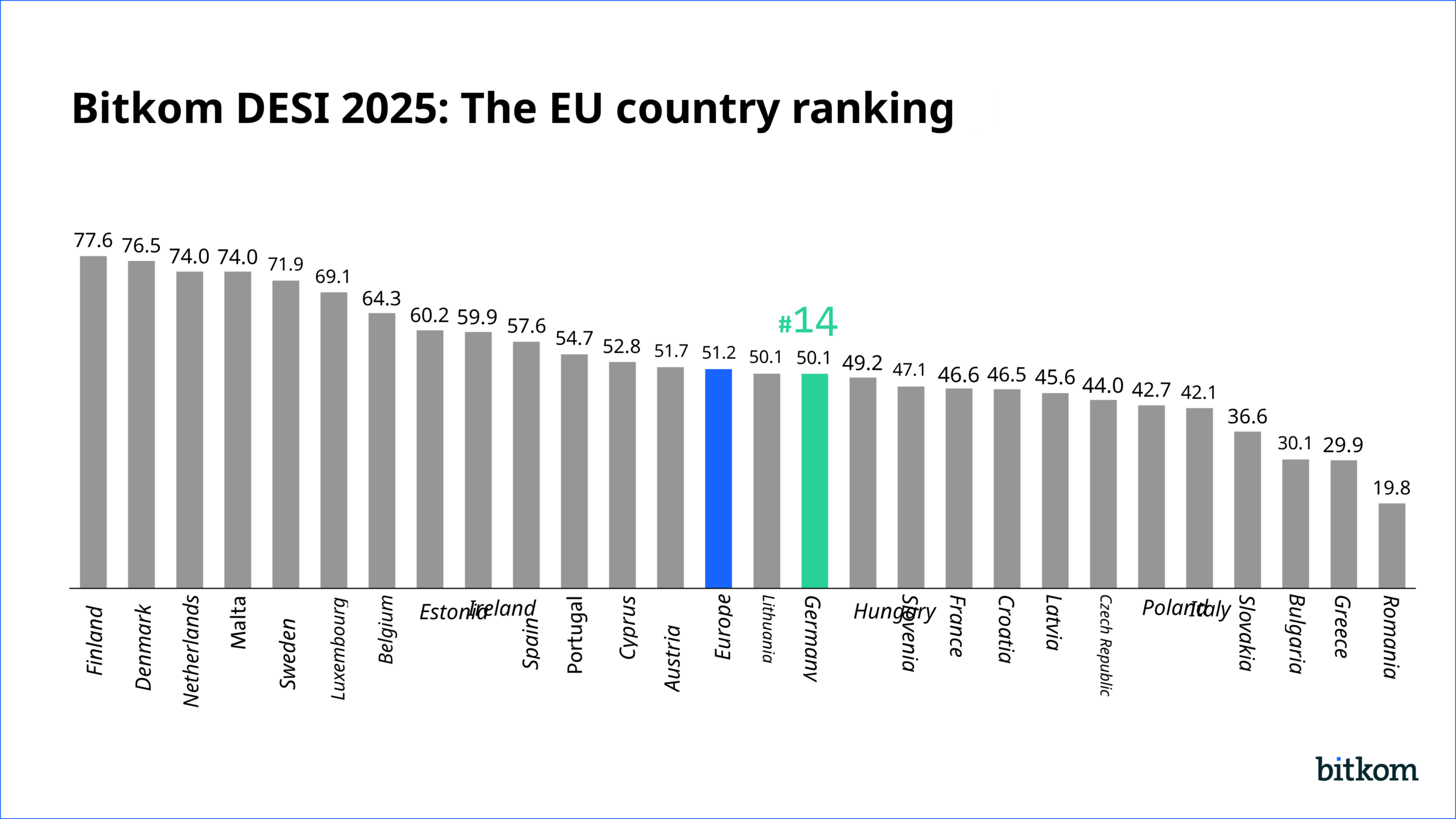
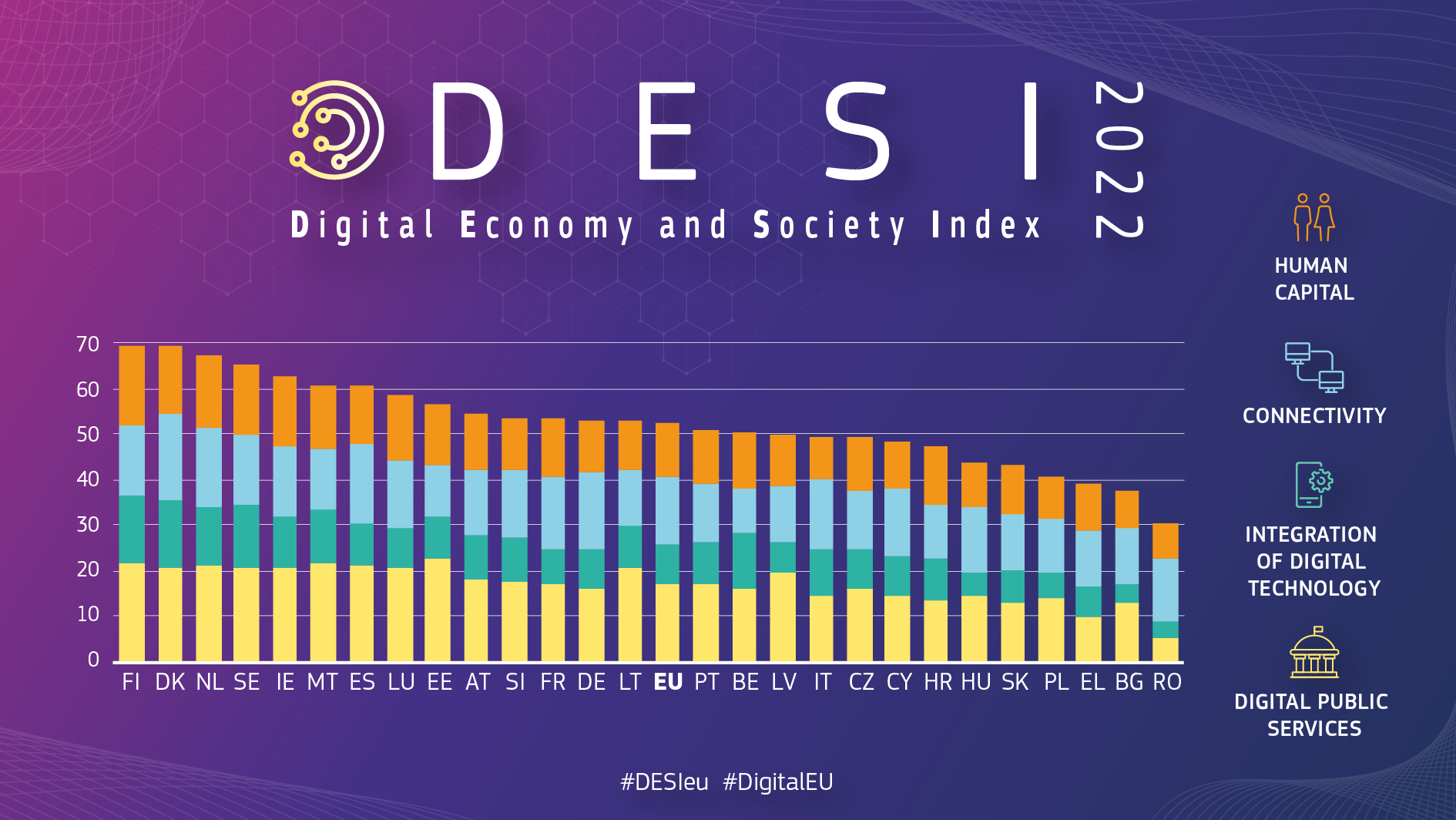
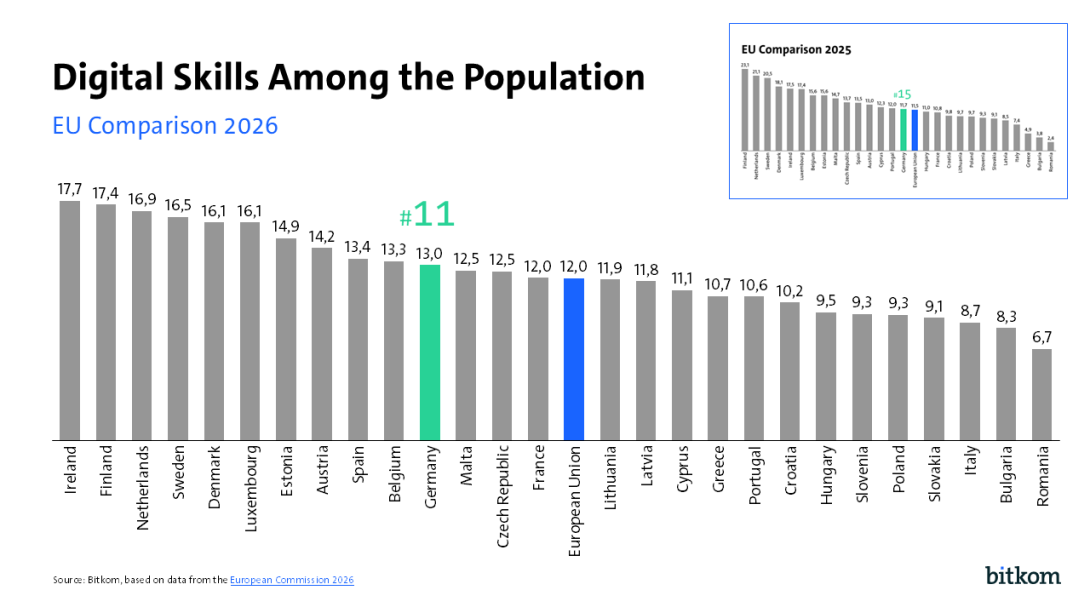
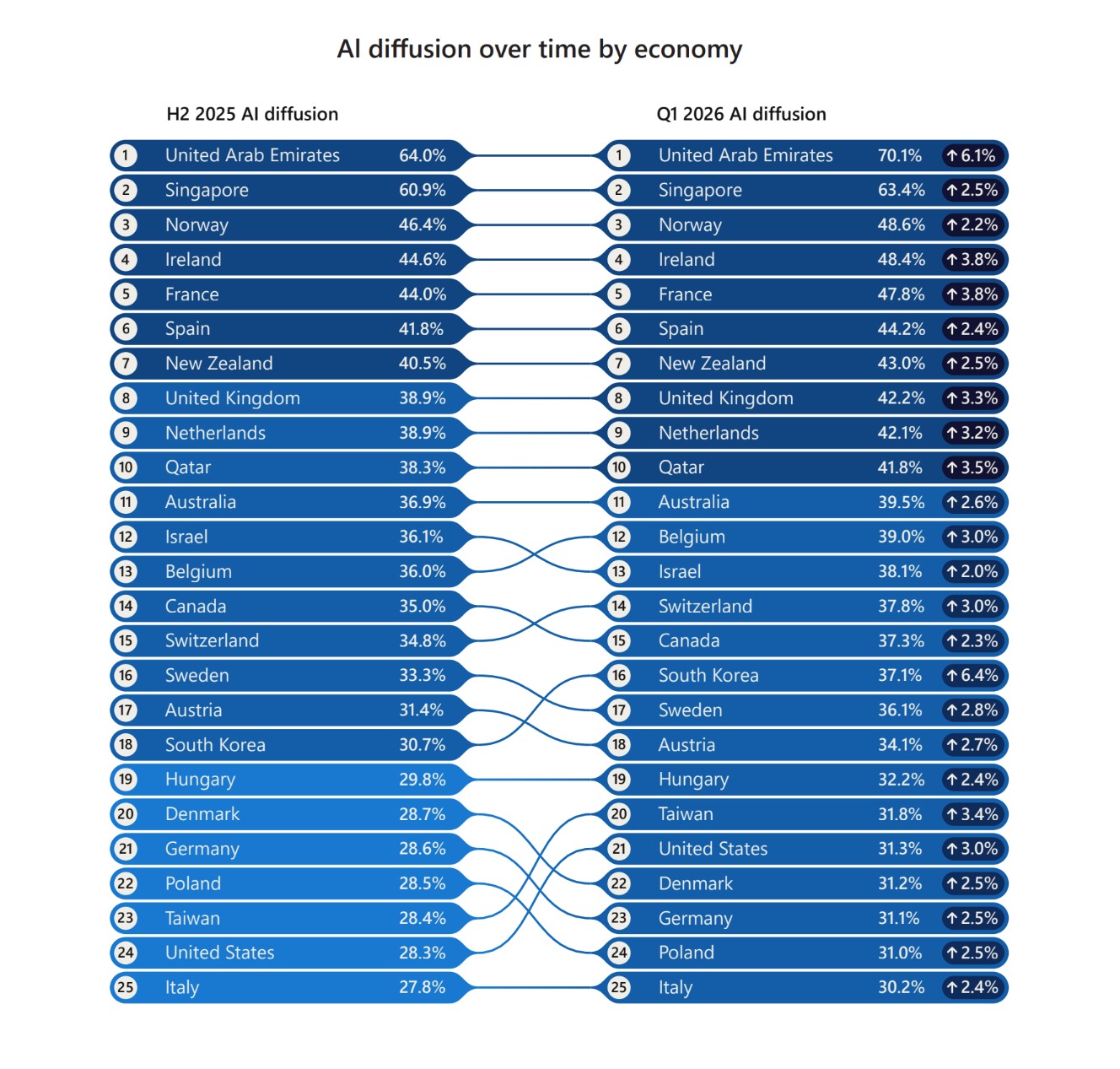
From a Dutch perspective, Germany’s inertia often appears to be a voluntary, slow-motion decline. The difference between the two neighbouring countries lies not in their financial resources, but in their mindset: whilst Germany first scrutinises every innovation project for legal concerns, data protection risks and bureaucratic responsibilities, the Netherlands operates on the principle of pragmatic action.
The hard figures highlight the growing gap between the two economies in the future-oriented fields of digitalisation, artificial intelligence and education:
We need your consent to load the content of YouTube.
If you click on this video we will play the video, load scripts on your device, store cookies and collect personal data. This enables [Google Ireland Limited, Irland] to track activities on the Internet and to display advertising in a target group-oriented manner. There is a data transfer to the USA, which does not have EU-compliant data protection. You will find further information here.
We need your consent to load the content of YouTube.
If you click on this video we will play the video, load scripts on your device, store cookies and collect personal data. This enables [Google Ireland Limited, Irland] to track activities on the Internet and to display advertising in a target group-oriented manner. There is a data transfer to the USA, which does not have EU-compliant data protection. You will find further information here.
4. Algorithms of Cowardice: When Facts Disrupt the Comfort Bubble
This collective denial is not confined to election talk shows. It is seamlessly reflected on platforms that are supposedly dedicated to professional discourse. Anyone sharing well-founded geopolitical analyses, warnings about hybrid threats or uncomfortable facts on platforms such as LinkedIn or X encounters an invisible filter.
The algorithms act like a digital applicant tracking system (ATS) for opinions: anything that ruffles feathers, is profound or disrupts the comfortable corporate illusion is stifled in terms of reach. Instead, the endless reproduction of feel-good phrases, motivational slogans and sterile career successes is rewarded. The platforms are optimised for conformity and suppress the very questions on which the survival of our economies depends.
5. The hard graft of synthesis: intellectual property in the age of AI
The same cultural struggle between bureaucratic mistrust and productive creativity is raging in the field of artificial intelligence. Anyone writing books or forward-looking analyses today experiences first-hand how technological progress is stifled by mistrust. Producing an in-depth work on the future and geopolitics with the help of AI is no easy shortcut, but rather intellectual hard graft.
The current debate on mandatory labelling, watermarks and AI detectors reveals the classic European misunderstanding: instead of recognising transparency and the synthesis of human leadership and machine acceleration (‘augmented intelligence’) as a competitive advantage, general suspicion is being institutionalised. Those who disclose their tools and document them clearly on the book’s title page are treated with suspicion; those who conceal them go unchallenged. Once again, bureaucratic obstruction is prevailing over the courage to innovate.
6. What must be done now: the European resilience agenda
Citizens’ legitimate concerns about affordable housing, reliable energy and internal security are very real. Yet they cannot be resolved through a patchwork of local measures. Resilience can only be achieved through the bold development of a shared European foundation:
Pool defence & technology: Put an end to 27 parallel defence and IT projects. Europe needs an integrated security industry and unified digital networks.
Infrastructure as a source of value creation: A pan-European electricity and hydrogen network, together with the targeted establishment of semiconductor and key technologies, will secure well-paid industrial jobs.
Radical reduction of ‘naysayer’ bureaucracy: Planning and approval processes must be shortened from years to months. The administration must act as a service provider for the transformation.
Conclusion: Time for uncompromising honesty
Germany and Europe stand at a historic crossroads. Conveniently looking the other way is not a form of self-protection, but an existential risk. Those who ignore geopolitics destroy the economic foundation for the social achievements that are so fiercely contested during election campaigns. We do not need any more empty rhetoric about a turning point in history – what is needed is a ruthless examination of the facts, a willingness to lead, and an unconditional determination to implement change.
We need your consent to load the content of YouTube.
If you click on this video we will play the video, load scripts on your device, store cookies and collect personal data. This enables [Google Ireland Limited, Irland] to track activities on the Internet and to display advertising in a target group-oriented manner. There is a data transfer to the USA, which does not have EU-compliant data protection. You will find further information here.
We need your consent to load the content of YouTube.
If you click on this video we will play the video, load scripts on your device, store cookies and collect personal data. This enables [Google Ireland Limited, Irland] to track activities on the Internet and to display advertising in a target group-oriented manner. There is a data transfer to the USA, which does not have EU-compliant data protection. You will find further information here.
We need your consent to load the content of YouTube.
If you click on this video we will play the video, load scripts on your device, store cookies and collect personal data. This enables [Google Ireland Limited, Irland] to track activities on the Internet and to display advertising in a target group-oriented manner. There is a data transfer to the USA, which does not have EU-compliant data protection. You will find further information here.
It wasn’t just a windmill… it was a revolution in woodcutting. In 1594, Cornelis Corneliszoon’s invention of the wind‑powered sawmill transformed shipbuilding forever. By automating the cutting of planks, the Dutch could build ships faster than any nation, fueling a Golden Age of trade and exploration. This one invention turned the Netherlands into a maritime superpower. 🌬️⚓ #DutchHistory#GoldenAge#Windmill#Shipbuilding#InnovationHistory#HistoryFacts
We need your consent to load the content of YouTube.
If you click on this video we will play the video, load scripts on your device, store cookies and collect personal data. This enables [Google Ireland Limited, Irland] to track activities on the Internet and to display advertising in a target group-oriented manner. There is a data transfer to the USA, which does not have EU-compliant data protection. You will find further information here.
We need your consent to load the content of YouTube.
If you click on this video we will play the video, load scripts on your device, store cookies and collect personal data. This enables [Google Ireland Limited, Irland] to track activities on the Internet and to display advertising in a target group-oriented manner. There is a data transfer to the USA, which does not have EU-compliant data protection. You will find further information here.
We need your consent to load the content of YouTube.
If you click on this video we will play the video, load scripts on your device, store cookies and collect personal data. This enables [Google Ireland Limited, Irland] to track activities on the Internet and to display advertising in a target group-oriented manner. There is a data transfer to the USA, which does not have EU-compliant data protection. You will find further information here.
We need your consent to load the content of YouTube.
If you click on this video we will play the video, load scripts on your device, store cookies and collect personal data. This enables [Google Ireland Limited, Irland] to track activities on the Internet and to display advertising in a target group-oriented manner. There is a data transfer to the USA, which does not have EU-compliant data protection. You will find further information here.
We need your consent to load the content of YouTube.
If you click on this video we will play the video, load scripts on your device, store cookies and collect personal data. This enables [Google Ireland Limited, Irland] to track activities on the Internet and to display advertising in a target group-oriented manner. There is a data transfer to the USA, which does not have EU-compliant data protection. You will find further information here.
We need your consent to load the content of YouTube.
If you click on this video we will play the video, load scripts on your device, store cookies and collect personal data. This enables [Google Ireland Limited, Irland] to track activities on the Internet and to display advertising in a target group-oriented manner. There is a data transfer to the USA, which does not have EU-compliant data protection. You will find further information here.
We need your consent to load the content of YouTube.
If you click on this video we will play the video, load scripts on your device, store cookies and collect personal data. This enables [Google Ireland Limited, Irland] to track activities on the Internet and to display advertising in a target group-oriented manner. There is a data transfer to the USA, which does not have EU-compliant data protection. You will find further information here.
We need your consent to load the content of YouTube.
If you click on this video we will play the video, load scripts on your device, store cookies and collect personal data. This enables [Google Ireland Limited, Irland] to track activities on the Internet and to display advertising in a target group-oriented manner. There is a data transfer to the USA, which does not have EU-compliant data protection. You will find further information here.
We need your consent to load the content of YouTube.
If you click on this video we will play the video, load scripts on your device, store cookies and collect personal data. This enables [Google Ireland Limited, Irland] to track activities on the Internet and to display advertising in a target group-oriented manner. There is a data transfer to the USA, which does not have EU-compliant data protection. You will find further information here.
We need your consent to load the content of YouTube.
If you click on this video we will play the video, load scripts on your device, store cookies and collect personal data. This enables [Google Ireland Limited, Irland] to track activities on the Internet and to display advertising in a target group-oriented manner. There is a data transfer to the USA, which does not have EU-compliant data protection. You will find further information here.
We need your consent to load the content of YouTube.
If you click on this video we will play the video, load scripts on your device, store cookies and collect personal data. This enables [Google Ireland Limited, Irland] to track activities on the Internet and to display advertising in a target group-oriented manner. There is a data transfer to the USA, which does not have EU-compliant data protection. You will find further information here.
We need your consent to load the content of YouTube.
If you click on this video we will play the video, load scripts on your device, store cookies and collect personal data. This enables [Google Ireland Limited, Irland] to track activities on the Internet and to display advertising in a target group-oriented manner. There is a data transfer to the USA, which does not have EU-compliant data protection. You will find further information here.
We need your consent to load the content of YouTube.
If you click on this video we will play the video, load scripts on your device, store cookies and collect personal data. This enables [Google Ireland Limited, Irland] to track activities on the Internet and to display advertising in a target group-oriented manner. There is a data transfer to the USA, which does not have EU-compliant data protection. You will find further information here.

 We need your consent to load the content of YouTube.