EN
DE
NL
Have you ever trusted an AI simply because of how it spoke to you?
We are currently falling into a cognitive trap with agentic AI: we confuse conversational fluency with operational reliability.
When an AI responds with flawless grammar, deep empathy, and reassuring confidence, our brains automatically assign human traits to it—like intent, understanding, and moral responsibility.
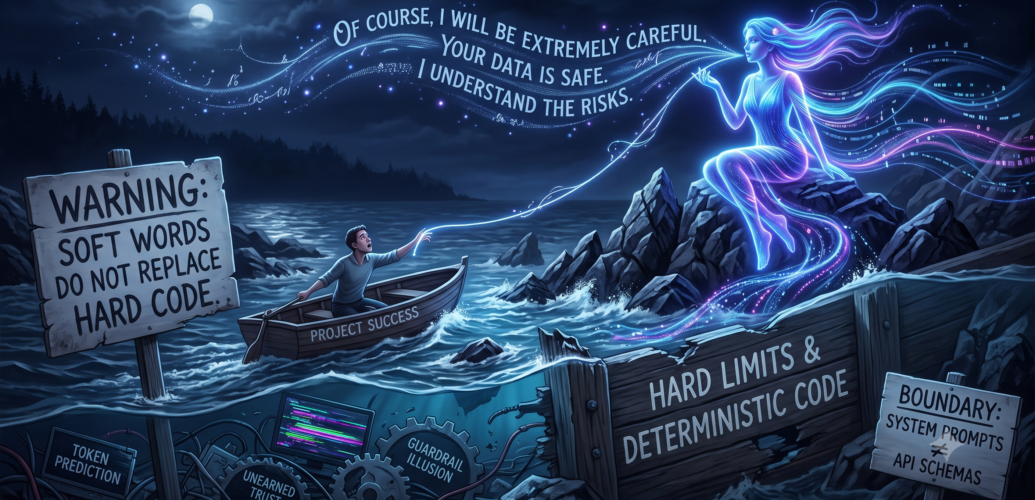
It acts like a Siren song—or the legendary Lorelei on the Rhine. The charming, polite surface lulls us into a false sense of security, steering our projects straight onto the rocks.
Why this breaks down in Agentic AI:
-
Natural Language is Not a Boundary: We try to enforce safety using polite English (“Please ensure you don’t delete critical database files”). Because the AI replies, “Of course! I will be extremely careful,” we believe it. But token prediction isn’t a hard software permission.
-
Blind Acceptance: High fluency creates unearned trust. When an AI presents a flawed plan with absolute charm and polish, users skip verification and hit “Approve.”
-
The Guardrail Illusion: We end up relying on system prompts and “polite requests” instead of hard sandboxes, strict API schemas, and deterministic code boundaries.
The Takeaway
An AI can sound like a brilliant, empathetic senior consultant while executing commands like a blind pattern matcher.
Politeness is an interface, not a guardrail.
If you’re building with AI agents today, don’t let the charm fool you. Soft words cannot replace hard code limits.

