In conference rooms from Frankfurt to the Ruhr valley, I’ve seen the same pattern repeat: companies adopt the vocabulary of “agile” while clinging to the control of the past. We call it a transformation, but for the people on the ground, it often feels like an “Agility Trap”—more ceremonies, more meetings, and less actual work.
EN
DE
NL
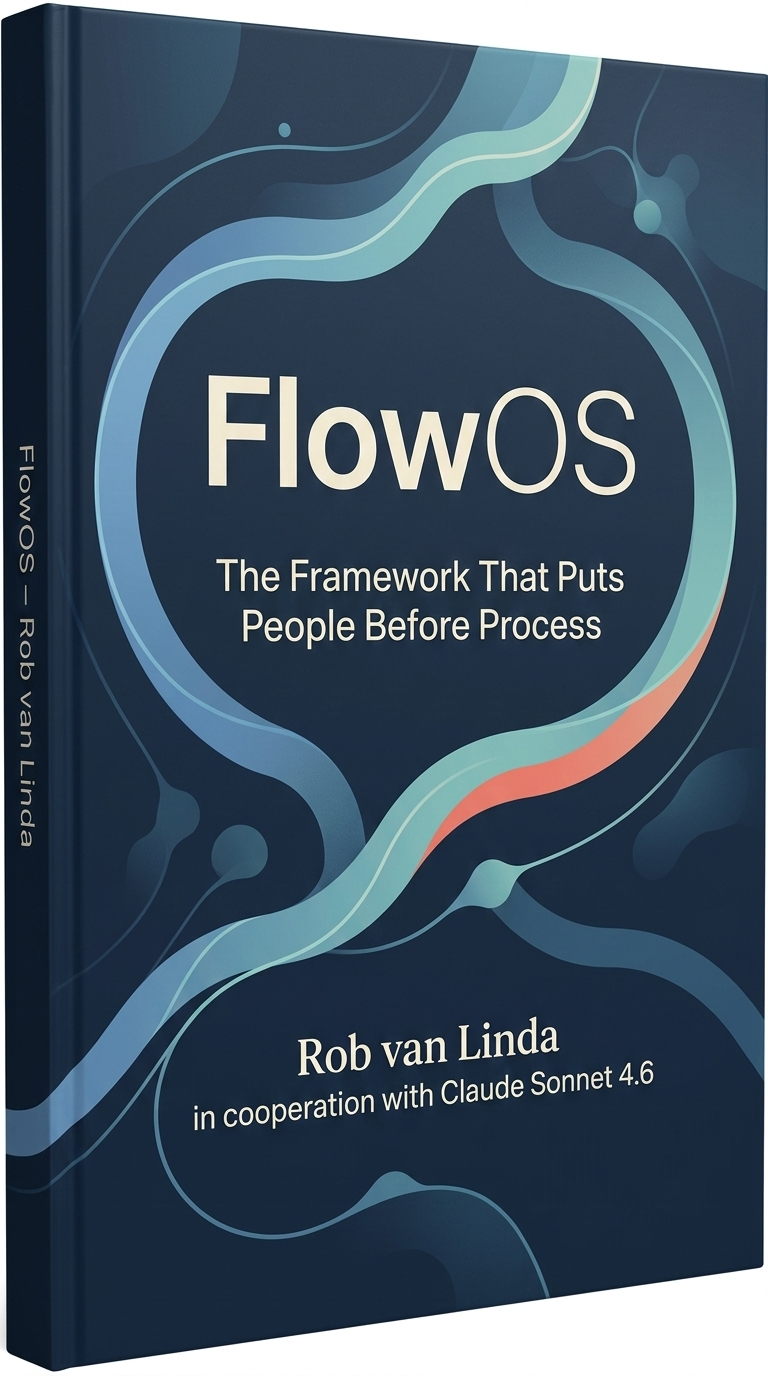
I wrote my new book, FlowOS, because I believe there is a better way.
Read/donwload the book here: Book_FlowOS_Framework
The Stories Behind the System
FlowOS wasn’t born in a boardroom; it grew from years of watching good people trapped in broken systems. I remember proposing a blog post with actual substance about agile culture, only to be told it was “too esoteric” while the company mascot in a Santa hat remained the face of the brand. I remember being told, “He is the chef. You have to obey,” in a company that claimed to be agile but practiced pure hierarchy.
These aren’t just my stories—they are the stories of everyone who has felt their role hollowed out into “meeting administration”.
What is FlowOS?
FlowOS is not a replacement for Scrum, Kanban, or OKRs. Instead, it is a human-centered operating system that integrates these proven methods into a single, honest architecture. While a methodology tells you what to do, an operating system creates the environment where work can happen well—and then gets out of the way.
The Core Promise: Reclaiming Your Capacity
Most “transformations” consume the very time they promise to save. FlowOS is built on a different principle: Transformation must release time and cognitive capacity, or it will be discarded.
For example, FlowOS replaces five daily interruptions with one Weekly Sync. This protects the “maker’s schedule,” allowing the deep, uninterrupted blocks of time needed to actually produce quality work.
The Five Phases of Flow
FlowOS moves teams through five distinct phases to ensure they are building the right things for the right reasons:
-
Empathise: Bridging the “Empathy Gap” by understanding the real human needs—like the firefighter at 2:00 AM—before making design decisions.
-
Define: Creating honest Management Objectives that provide direction without dictating every task.
-
Discover: Validating assumptions before building, ensuring we don’t just “run fast in an unknown direction”.
-
Realise: Four-week cycles of focused work, protected from constant interruptions.
-
Scale: Growing the framework by protecting culture and maintaining human pace, rather than just “doubling in size” without a foundation.
People Before Process
Whether you use enterprise software or sketch your board in chalk on a concrete floor, the tool is never the point. The point is the thinking. FlowOS is for the leaders who want to move past “agility’s paperwork” and the practitioners who want their work to have genuine meaning again.
Are you ready to stop managing the calendar and start managing the flow?
To learn more about the framework, check out my new book: FlowOS: The Framework That Puts People Before Process.

